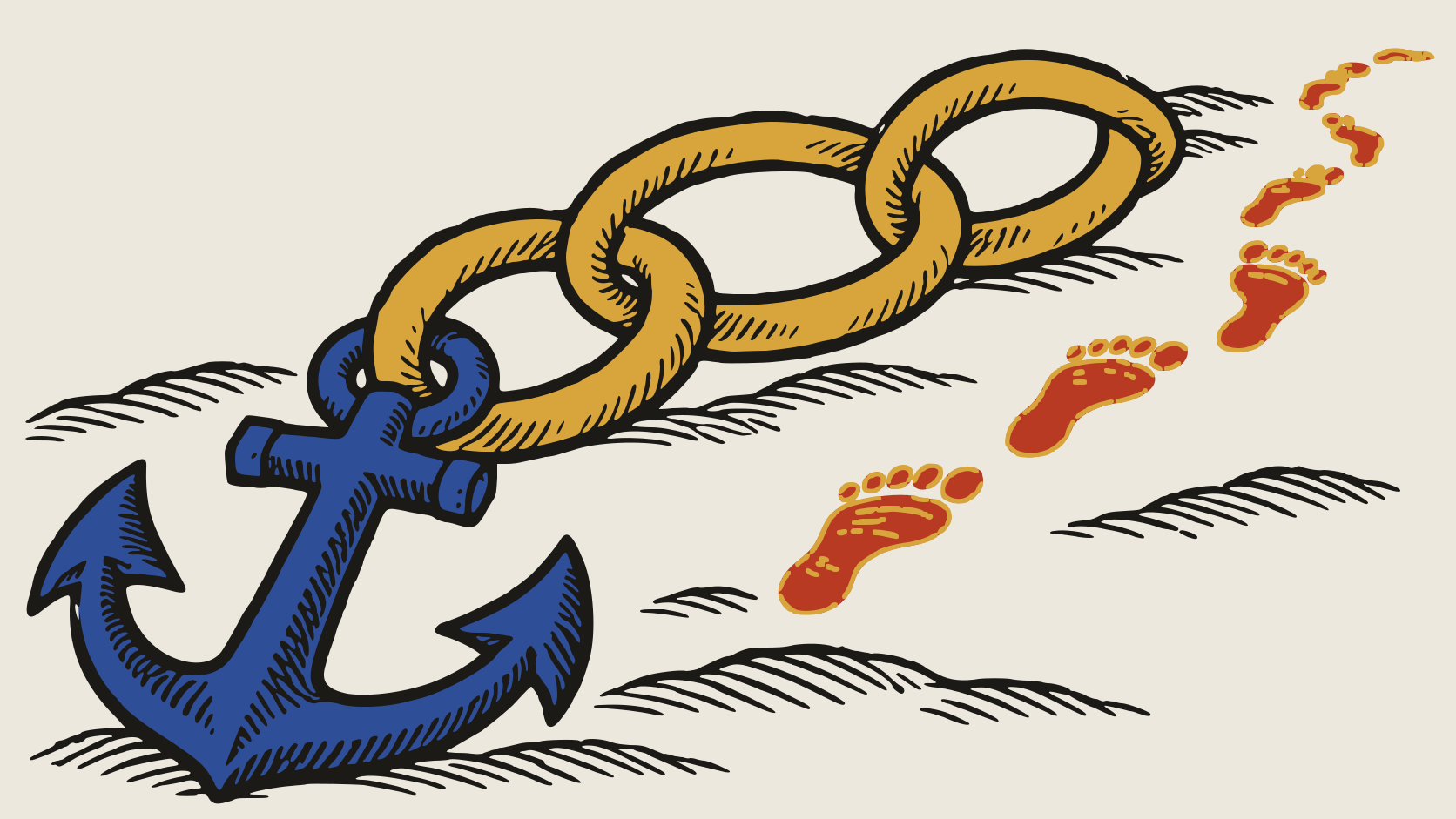
Attracting the Same Person Destiny Matrix: Why the Pattern Repeats
In a destiny matrix, attracting the same person again and again is read as a loop between a few places on your chart: the entry point (j), which shows how you reach for people, the heart point (k), which shows the quality you long for, and the base of the karmic tail (D) and the home point (o), which show habits you learned early. When the cards at those places pull in different directions, the pattern can feel like fate. When they echo each other, it can feel like a groove. Either way it is a prompt for reflection, not a verdict on you or on anyone you have dated.
This guide shows where those places sit, how to calculate each one from a birth date, and how to read them together using a worked example. Then it goes through all 22 cards as a loop: the type you may reach for, how the loop tends to run, and one question to take away. If you want your own numbers first, the free destiny matrix calculator marks every point on the chart in a few seconds.
Attracting the same person: what the destiny matrix can and cannot say
People who search for "attracting the same person" are usually describing something specific. The faces change, but the story does not: the same kind of distance, the same kind of intensity, the same slow fade. It is a painful thing to notice, and it is natural to want a reason.
Repetition has ordinary explanations that need no chart. You meet people in the places you go, you say yes to what feels familiar, and familiar is not the same as good for you. A symbolic system cannot tell you which of these is at work in your life. What it can do is give you a short vocabulary for the pattern, so that "I always end up here" becomes a set of named parts you can examine one at a time.
That is also why this page does not promise to explain why you attract anyone. The destiny matrix does not describe your partners. Every number on your chart comes from your own birth date, so every card describes you: what you reach for, what you tolerate, what you learned at home. The sources we read are clear on this. One describes the love line as a map for noticing attraction, expectations and protective habits, and says directly that it is not a compatibility score and does not predict whether a relationship will work. Another warns that without self-knowledge you may keep attracting people who trigger your shadow side. The first claim is the safer one, and the one we follow.
The places on the chart that speak to a repeating pattern
Five places carry most of the talk about repeats. Each answers a different question.
The entry point (j) is the first number of the love line and sits on the lower axis, the middle of the karmic tail. Teachers read it as a familiar habit in love, often most visible under pressure. One source says it may describe what you repeat before you understand the pattern consciously. The question it asks: how do I reach for people?
The heart point (k) is the middle of the love line, under the heart symbol. It is read as the quality of connection you most want to feel. Our ideal partner guide goes through it in depth. The question: what am I looking for?
The crossing (l) is the third number of the love line, where the love diagonal meets the money diagonal. It is read as a direction of growth, and it also touches practical life: effort, security, who carries what. The question: what does this ask me to practice?
The base of the tail (D) sits at the bottom of the chart and starts the karmic tail. It is read as the lesson that keeps coming back in different clothes, an automatic reaction when you are tired or under strain. Our karmic tail guide covers the whole sequence. The question: what do I do on autopilot?
The home point (o) sits on the left axis, towards the outer edge. The site reads it as the family program you grew up inside: how your household handled feelings, rules, money and closeness. It describes what was modeled for you, not a verdict on your parents. The question: what did love look like where I learned it?
Two more places can join in if you want to go further. The upper-left and upper-right corners, f and g, are read as the father-line and mother-line inheritance. Our guide to the power of family explains them, and we leave them as a side note here because the five above already give plenty to work with.
For the wider tour of where all these places sit, see how to read a destiny matrix chart. For the three-point sequence in more depth, the relationship channel guide reads j, k and l in order.
How to find the points
Every step uses one reduction rule: if a sum is above 22, add its digits until the result is 22 or lower. 22 stays 22, and 29 becomes 11.
Start with the anchors:
- A is the day of birth, reduced if needed.
- B is the month, 1 to 12.
- C is the digits of the year added together, then reduced.
- D is A + B + C, reduced.
- E, the center, is A + B + C + D, reduced.
Then the five places each have a short recipe:
- Entry point. j is D + E, reduced.
- Heart point. First find n, which is C + E, reduced, and the crossing l, which is j + n, reduced. Then k is j + l, reduced.
- Crossing. l is j + n, reduced, as above.
- Base of the tail. This is D itself.
- Home point. First find s, which is A + E, reduced. Then o is A + s, reduced.
Naming differs between sites. One source calls the entry D1 and the crossing K, and reads the love line as D1, then heart, then K; those are our j, k and l in the same order. If a number you find elsewhere does not match, check which point that site is describing before you decide someone made an arithmetic mistake.
A worked example of attracting the same person: 15 May 1990
Take someone born on 15 May 1990, using the numbers our calculator produces.
- A = 15, B = 5, and C = 1 + 9 + 9 + 0 = 19.
- D = 15 + 5 + 19 = 39, which reduces to 12.
- E = 15 + 5 + 19 + 12 = 51, which reduces to 6.
- j = 12 + 6 = 18. n = 19 + 6 = 25, which reduces to 7. l = 18 + 7 = 25, which reduces to 7. k = 18 + 7 = 25, which also reduces to 7.
- s = 15 + 6 = 21, and o = 15 + 21 = 36, which reduces to 9.
So the five places read: D is 12, The Hanged Man; j is 18, The Moon; k is 7, The Chariot; l is 7, The Chariot again; and o is 9, The Hermit.
Here is one way to read that, and only one. The entry is the Moon: feeling runs deep, moods are sensed before they are spoken, and the shadow is mistaking worry for fact. The heart is the Chariot, which the site reads as admiration for someone determined and moving toward a goal, and the crossing repeats it. The home point is the Hermit: a household of private people, long silences, and a habit of handling things alone. The base of the tail, the Hanged Man, is about pausing, waiting and sometimes sacrificing for approval.
Put those together and a loop is easy to imagine. Someone who admires drive and momentum (Chariot) may be drawn to busy, goal-focused people. If closeness was something you managed alone at home (Hermit), you may not ask for much. Then a partner's long absences leave room for the Moon to fill in the silence with a story, and the Hanged Man waits. Whether that fits is for the person to judge. It might be a recognizable description or it might be nothing like their life. If it is nothing like it, that is a result too.
A second chart shows a different shape. For 28 November 1987, D is 10 (Wheel of Fortune), j is 21 (The World), k is 6 (The Lovers), l is 12 (The Hanged Man) and o is 4 (The Emperor). Nothing repeats. The questions here are different: how does a wish for wholeness at the entry sit beside a wish for mutual choice at the heart, and what happens to both if the home point taught that love had to be earned by being responsible? There is no single answer, and that is the point of asking.
How often the same card repeats
It helps to know how common repeats are before you read meaning into one. We ran every calendar date from 1900 to 2100, 73,414 dates in all, through our calculator and compared the points.
- The heart (k) matches the crossing (l) on 11,354 dates, about 15.5%. This is the most common repeat, and it is the one in the worked example above.
- The heart matches the base of the tail (D) on 4,964 dates, about 6.8%.
- The heart matches the home point (o) on 4,439 dates, about 6.0%.
- The heart matches the entry (j) on only 790 dates, about 1.1%.
- The heart matches at least one of j, l, D or o on 18,904 dates, about 25.7%.
- The entry, heart and crossing are never all the same card.
Two things follow. First, a repeat is not rare: about one chart in four has the heart echoed somewhere in these places. Second, the entry and the heart are almost always different cards. In most charts, how you reach for people and what you long for are not the same thing, which is a gentler way to describe the sense of being pulled two ways.
Teachers disagree on what a repeat means. Some read it as emphasis: a theme that runs through several places and may feel obvious in daily life. Another source adds that shared numbers between the love line and the karmic tail point to relational karma that wants conscious attention. We keep the simpler version. A repeat is a reason to look harder at one theme, not a reason to expect more of it.
The 22 cards as a loop
Read each card below twice if you like. Read the card at your heart point (k) as the type you may reach for. Read the same card at your entry point (j) as the way you may reach. The heart point never lands on 1 or 2, but those two are still worth knowing, because they can appear at the entry or at the home point. Each card has a bright side and a strained side, and each entry ends with a question to take away.
- 1 · The Magician. The type: resourceful, full of ideas, fun to build things beside. The loop: being won over by charm or cleverness, then finding the follow-through thin. The question: what does this person do, week to week, that I can check?
- 2 · The High Priestess. The type: private, perceptive, comfortable with silence. The loop: taking mystery for depth, then waiting to be guessed. The question: what have I not said out loud yet?
- 3 · The Empress. The type: warm, generous, good at making a home. The loop: looking to be looked after, or giving until nothing is left. The question: where do I take care of myself without a partner?
- 4 · The Emperor. The type: steady, protective, clear about what they want. The loop: drawn to structure, then meeting control. The question: who makes the decisions, and did we choose that?
- 5 · The Hierophant. The type: someone who shares values, tradition or a life philosophy. The loop: wanting a ready-made picture, then discovering the person does not fit it. The question: which values are mine, and which did I inherit?
- 6 · The Lovers. The type: someone who chooses you freely and means it. The loop: idealizing the first spark, or hesitating because no one seems perfect enough. The question: who am I when I feel fully chosen, and do I choose back?
- 7 · The Chariot. The type: determined, capable, moving toward a goal. The loop: competing with the person you admire, or choosing for how impressive they look. The question: what would I still value in them if their achievements were hidden?
- 8 · Justice. The type: fair, truthful, a person whose word holds. The loop: keeping score, testing people for flaws. The question: do I give myself the same fairness I ask for?
- 9 · The Hermit. The type: thoughtful, self-possessed, quietly wise. The loop: idealizing aloofness, then living side by side without much talk. The question: what signal tells us both "I need time, and I am still here"?
- 10 · Wheel of Fortune. The type: adaptable, optimistic, ready for change. The loop: waiting for destiny to deliver the right person, or mistaking turbulence for chemistry. The question: which parts of my life do I want to hold steady?
- 11 · Strength. The type: patient, kind, resilient. The loop: choosing someone who needs rescuing, or swallowing your own needs. The question: what is one plain request I can make this week?
- 12 · The Hanged Man. The type: reflective, unconventional, willing to wait and see. The loop: choosing someone unavailable, then waiting in limbo. The question: what date will I set for a decision?
- 13 · Death. The type: someone who inspires you to leave the old behind. The loop: intensity, endings, and starting the same cycle again. The question: what do I want to keep, and what am I ready to release?
- 14 · Temperance. The type: patient, balanced, good at blending differences. The loop: avoiding conflict until it builds, or picking someone for being easy. The question: what have I been smoothing over?
- 15 · The Devil. The type: strong chemistry, desire, a wish to be wanted. The loop: fixation or jealousy, and drifting toward what is hard to leave. The question: what am I holding on to that I would not choose today?
- 16 · The Tower. The type: someone whose honesty shakes up your assumptions. The loop: treating drama as proof of passion. The question: what truth did I already know before the upheaval?
- 17 · The Star. The type: gentle, optimistic, sincere. The loop: imagining a perfect match, then overlooking real flaws or waiting. The question: what does the person in front of me actually do?
- 18 · The Moon. The type: intuitive, imaginative, emotionally attuned. The loop: mixing up mystery with depth, or anxiety with intuition. The question: what is real here, and what is a story my feelings have told me?
- 19 · The Sun. The type: warm, open, joyful. The loop: expecting constant sunshine and steering away from anyone with a heavier mood. The question: can I stay when it clouds over?
- 20 · Judgement. The type: someone who encourages growth, speaks honestly and forgives. The loop: expecting a partner to fix you, or replaying old arguments. The question: which old grievance can I close?
- 21 · The World. The type: accomplished, worldly, at home in a bigger picture. The loop: choosing someone to complete you. The question: what already feels complete without a partner?
- 22 · The Fool. The type: playful, spontaneous, open to adventure. The loop: choosing lightness over reliability, or beginning again before anything deepens. The question: what would staying look like as an adventure?
When the entry and the heart pull against each other
Because the entry and the heart match only about 1% of the time, most charts hold a gap between how you reach and what you want. That gap is where the repeat is often easiest to see.
A few ways it can look, as examples and not as rules:
- The entry is cautious and the heart is bold. The Hermit at the entry beside the Chariot at the heart might read as someone who keeps their feelings private but is drawn to people who are loud about their goals. The loop is wanting a partner to carry the energy and then feeling unseen.
- The entry is warm and the heart is steady. The Empress at the entry beside the Emperor at the heart might read as giving freely to people who offer structure in return, until the structure turns into rules.
- The entry is open and the heart is fixed. The Fool at the entry beside Justice at the heart might read as leaping in quickly with someone you then hold to a strict standard.
If you also see a card repeated at the home point, that is a second thing to ask about. The home point is not about your partners. It records what you may have learned about how love is done, and the loop may be less about who you attract and more about which version of love feels normal.
The crossing is the quiet third. It is read as what the relationship asks you to practice, and it shares its card with the start of the money line. If the same number comes up in your love life and in how you handle effort and security, our money line guide reads the other side of it.
A four-week self-check
A chart can name the pattern, but only your own history can confirm it. Here is a short exercise that uses the five places.
- Week one: write the story. List the last three people you were seriously drawn to. Under each, write three plain facts: how it started, what you wanted from it, how it ended or faded. Do not interpret yet.
- Week two: match the facts to the places. Put your entry card next to how each one started. Put your heart card next to what you wanted. Put the base of the tail next to what you did when it got hard. Keep the matches that fit and drop the ones that do not.
- Week three: ask about home. Read the home point and write down two things about how love was done where you grew up: who spoke first, who gave in, what was not discussed. Notice whether any of it shows up in the three stories.
- Week four: run one experiment. Choose the smallest change that touches the loop, such as saying one thing you would normally leave unsaid, or asking one question before you decide how someone feels. Then write down what happened.
If you want to see how two charts meet, the compatibility calculator places both sets of numbers side by side. It does not rate a relationship, but it can start a conversation.
Common mistakes when reading the loop
Reading the cards as a description of your partners. The numbers come from your birth date, so they describe you. If you want to explore two people, compare two charts rather than guessing from one line.
Treating a hard card as a warning. The Tower, Death and The Devil sound dramatic. In a reflective reading they point to themes such as change, endings and attachment, not to events about to happen.
Using the loop to excuse a choice. "My chart says I attract the wrong people" is a way to stop looking. The point of naming a pattern is to notice it early enough to choose something else.
Stopping at the flattering side. Each card above has a bright version and a strained one. If you read only the bright side you learn nothing new. If you read only the shadow you may decide to blame yourself for what was not your doing.
Comparing across sites without checking labels. Different letters, or a line read from the other end, can make two accurate calculators look as if they disagree.
Using the chart to settle a big decision. A symbolic tool is a poor judge of whether to stay or leave. It can help you phrase the question. The decision should rest on your circumstances and on people who know them.
What this can and cannot tell you
The destiny matrix is a self-reflection tool built on numerology and tarot symbolism. It does not predict who you will meet, whether a relationship will last or what any person will do. It does not explain why a specific person came into your life, and it cannot judge compatibility on its own. The system has no scientific support, and its teachers disagree on details, including how to name and order the points.
It is also not a medical or psychological assessment. If a pattern in your relationships causes you distress, or if you ever feel unsafe, please talk with someone you trust or a licensed counselor. A chart is a poor substitute for that help. Use this page the way you would use a journaling prompt: keep what helps you think, and leave the rest.
Check your own entry, heart and home points
Ready to see yours? Enter your birth date in the free destiny matrix calculator to draw your chart, then find the entry, the heart, the crossing, the base and the home point. No sign-up is needed, and you can come back here to read each card.
Sources
- Love Line in the Destiny Matrix, matrixdestiny.io: the three love line positions and their formulas, the entry read as what you may repeat before you understand it, and the statement that it is not a compatibility score or a prediction.
- Heart Arcana in the Destiny Matrix, matrixdestiny.io: where the heart number sits on the chart, how it is calculated, and the note that names for the position vary between guides.
- Karmic Tail in the Destiny Matrix, matrixdestiny.io: the tail read as a sequence of familiar reactions, present work and direction, and the warning that the numbers do not measure guilt.
- How to Find Your Ideal Partner Using the Destiny Matrix, destinymatrixinfo.com: the three love line positions and the remark that without self-knowledge you may keep attracting people who trigger your shadow side.
- Love Line in the Destiny Matrix, destinymatrixcalc.org: the advice to look for repeated numbers within the love line and shared numbers with the karmic tail line.
- The love line in the Destiny Matrix, Mind University: the entry to the love line sits next to the karmic tail, and the line is read for the mistakes in love you need to correct.
For self-reflection only. The destiny matrix is symbolic, not a prediction and not a medical diagnosis. Want your own numbers? Use the free destiny matrix calculator.